
Beaufort County Arrest Records
Beaufort County arrest records begin on the law-enforcement and detention side. The Sheriff's Office, municipal police departments, and the Detention Center may create reports or booking records when a person is arrested. The county inmate roster XML inspected in the research showed fields for name, booking date, arresting agency, charge description, statute code, warrant number, bond amount, and court. That is not the same as the final court case file.
Court charges after arrest begin when a charge is filed or recorded in a court process. In Beaufort County, criminal charges may appear in Magistrate Court, Municipal Court, or General Sessions in Circuit Court. The full Beaufort County criminal court records page follows the later case file, including pleas, motions, disposition, and sentencing. This page stays with the arrest-to-charge path: what the arrest record can show, what the charge record can show, and how status changes should be read.
Beaufort Court Charges After Arrest
After an arrest, charge information can appear in more than one place. The jail roster can show the offense description and bond tied to custody. The Public Index or court roster can show the case number, court agency, plea, hearings, and disposition when a court case is filed. Sheriff's reports may explain the law-enforcement event, but reports are requested through Sheriff's records or FOIA channels, not through the Clerk's criminal case file.
| Source | What It Helps Confirm | Limit |
|---|---|---|
| Detention roster | Booking, custody, bond, charge text, warrant number, and court name when listed | It is not the final court outcome. |
| Public Index | Case number, court events, charge status, plea, and disposition when available | It may be summary data, not certified copies. |
| Sheriff FOIA or report request | Incident or law-enforcement report access when releasable | Active investigations and exempt material may be withheld. |
| Clerk of Court | Certified court copies and General Sessions records | The Clerk does not replace law-enforcement report channels. |
Note: A single Beaufort County arrest can produce several charge lines, and each charge may have its own bond, court, and disposition.
Find Beaufort Arrest Records and Charges
Start with the source that matches the question. For current custody and recent booking details, use the Beaufort County Detention Center inmate inquiry system or recent booking feed. For court charges and outcomes, use the South Carolina Judicial Branch case search and the Beaufort County Public Index. For reports, the Sheriff's media resources page says recent incident reports may be inspected or copied at Sheriff's offices during posted report windows, while older reports use the Sheriff's FOIA link.
- Check the Detention Center inquiry route if the question is current custody, booking, bond, or recent release.
- Search the Beaufort County Public Index for the defendant name or case number when the question is a filed court charge.
- Read each charge line separately and compare the charge text, statute, warrant number, bond, court, and status.
- Contact the Clerk of Court criminal division for certified General Sessions records or copy questions.
- Use Sheriff's FOIA or report channels for law-enforcement reports, subject to exemptions.
The Beaufort County Magistrate bond information page is one official source for bond hearings and funds tied to people held at the Detention Center.
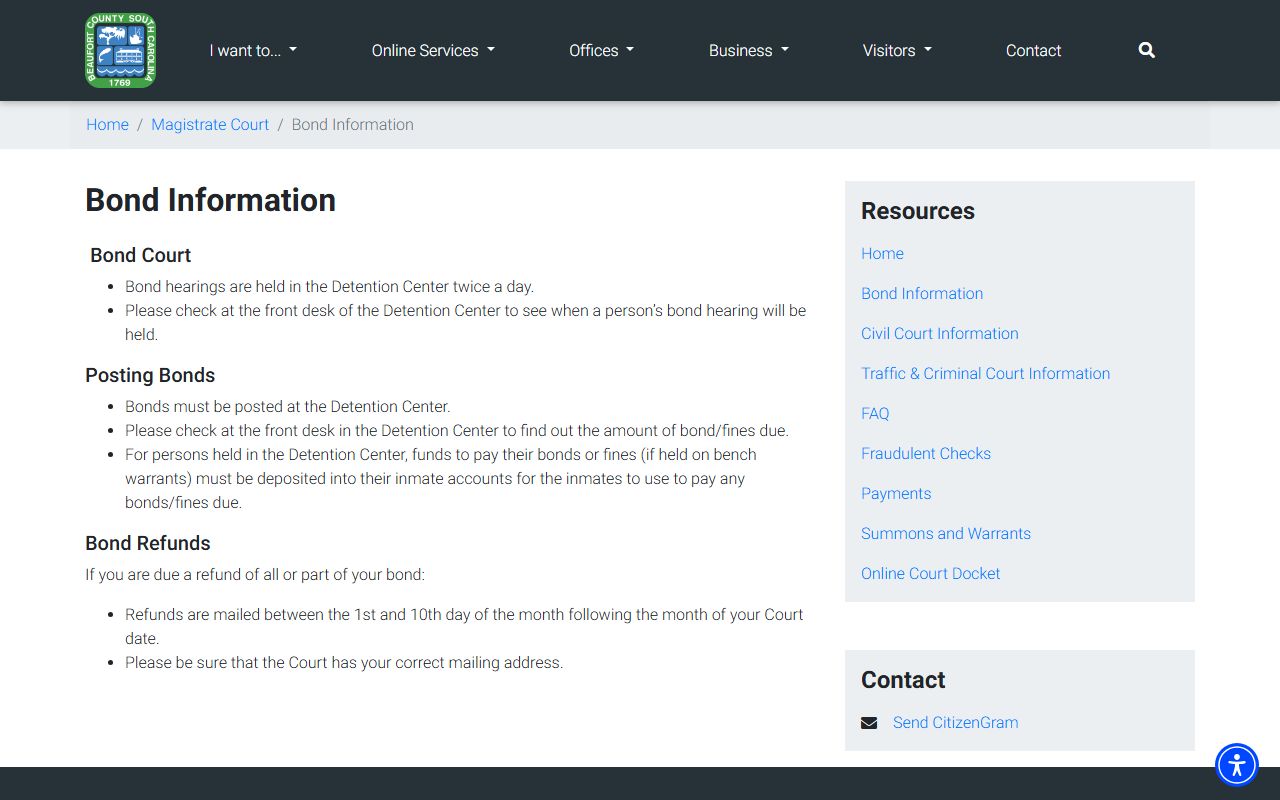
Bond details help link booking records to the early court process because a court may set bond before the later charge record reaches final disposition.
Charging Documents in Beaufort County
South Carolina research for Beaufort County identifies indictments, warrants after service or arrest, pleas, dispositions, and docket events as criminal record types. In plain terms, a charging document is the written basis for the court charge. It can be a complaint or warrant-linked accusation in a lower court setting, an information used by a prosecutor where allowed, or an indictment in a General Sessions felony context. The name and form depend on the court and charge.
| Document Type | Who Uses It | What It Means for Charge Records |
|---|---|---|
| Complaint or warrant-based charge | Law enforcement, Magistrate Court, or Municipal Court context | Starts or supports the accusation and may connect to a warrant or summons. |
| Information | Prosecutor where the procedure applies | Shows the prosecutor's filed accusation without relying on a grand jury label. |
| Indictment | General Sessions felony prosecution | Formal charge document often tied to Circuit Court criminal prosecution. |
The Fourteenth Circuit Solicitor is the Beaufort County prosecutor for General Sessions cases. The office describes itself as the chief prosecuting agency for Beaufort, Allendale, Colleton, Hampton, and Jasper counties.
Beaufort Charge Status Terms
Charge status is the part of an arrest-to-court record that most often changes. A booking record may show the initial charge text. A later court record may show the charge amended, reduced, dismissed, or resolved by plea or trial. Beaufort County users should read every charge row with its date and court because one person can have charges in more than one court level from the same event.
| Status | Plain Meaning | Record Check |
|---|---|---|
| Pending | The charge has not reached final court disposition. | Confirm the next hearing or roster date. |
| Amended or reduced | The original charge was changed to another charge or lower severity. | Compare old and new charge text in the docket. |
| Dismissed | The court record shows the charge did not proceed to conviction. | Check whether other charges from the same case remain. |
| Nolle prosequi | The prosecutor chose not to proceed on the charge. | Verify the entry at the case or charge level. |
| Disposed | The charge or case has a recorded outcome. | Read the disposition and sentencing fields together. |
Charge changes can also occur through diversion. The Solicitor's court alternatives page describes Pre-Trial Intervention for first-time nonviolent offenders, but the court file controls whether a specific Beaufort County charge was dismissed, reduced, or otherwise resolved.
Beaufort Charges vs Convictions
Arrest records and charge records do not prove guilt. They show that a person was arrested or accused. A conviction requires a court result, such as a guilty plea or verdict. This distinction is especially important in Beaufort County because the inmate roster can show recent charge data before the Public Index has a final disposition, and the Public Index can show charges that were dismissed or changed.
| Point | Charge | Conviction |
|---|---|---|
| Meaning | An allegation or filed offense | A final court outcome based on plea or verdict |
| Where found | Booking roster, warrant field, complaint, indictment, docket | Disposition and sentencing entries |
| Can change | Yes, it can be amended, reduced, or dropped | May be appealed or later affected by expungement law |
| Use with care | Do not use as proof of guilt | Still verify with certified court records for formal use |
Prosecution and Defense Channels
The Fourteenth Circuit Solicitor decides and prosecutes eligible criminal charges in General Sessions. Prosecutor decisions can affect whether a charge is filed as shown at arrest, replaced by a different charge, diverted, dismissed, or moved forward for plea or trial. For court charge questions after arrest, the Solicitor, court clerk, defense attorney, or public defender may be more useful than a booking roster if the case is already in court.
The Fourteenth Circuit Public Defender's Beaufort office is at 1905 Duke Street, Suite 210, Beaufort, SC, with mailing address PO Box 525, Beaufort, SC 29901. Research lists 843-255-5000 as the main number and 843-255-5807 or 843-255-5821 for the front office. The Magistrate criminal guidance says public defender appointment must occur before the scheduled court date.
The SCCID Beaufort County public defender roster identifies the local public defender structure.
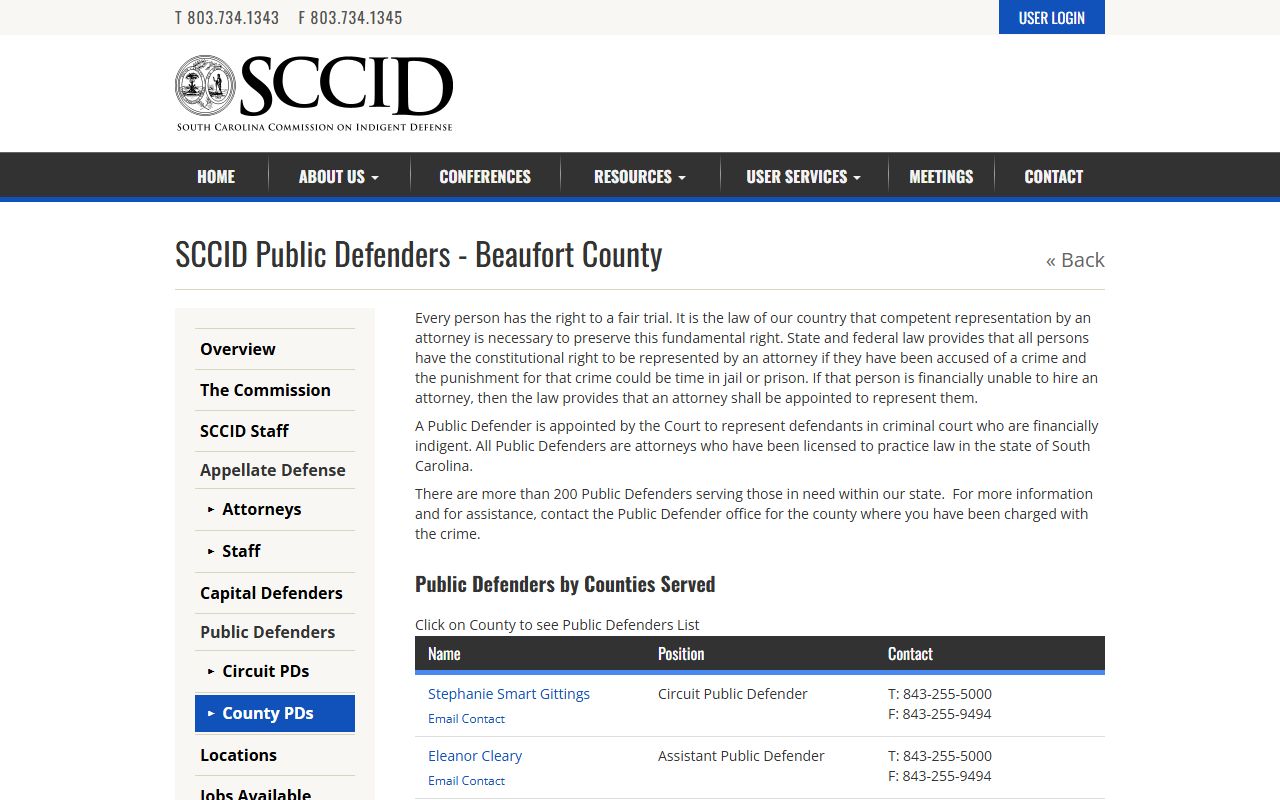
Defense counsel status is not just a contact issue; it can shape continuances, plea entries, and how charges after arrest move through the court record.
Restricted Beaufort Arrest Records
Not every arrest, charge, or report detail is public. Juvenile records are restricted by South Carolina law. Adoption, juvenile, mental-health, sealed, and expunged matters are not ordinary public records. The research also notes that body-worn camera recordings are not public records subject to FOIA under the Sheriff's cited Section 23-1-240. Active investigations and victim-sensitive records can be withheld or redacted.
| Record Type | Public Access Risk | Why It May Be Limited |
|---|---|---|
| Juvenile charge records | Often restricted | South Carolina Juvenile Justice Code limits access and identifying information. |
| Sealed records | Not public unless authorized | Court order limits public access. |
| Expunged records | Removed from ordinary public access | Statutory process changes what the public can see. |
| Sheriff reports | May be redacted or withheld | FOIA exemptions, investigation status, and privacy limits may apply. |
The official South Carolina Juvenile Justice Code is a key source for juvenile confidentiality in Beaufort County charge records.
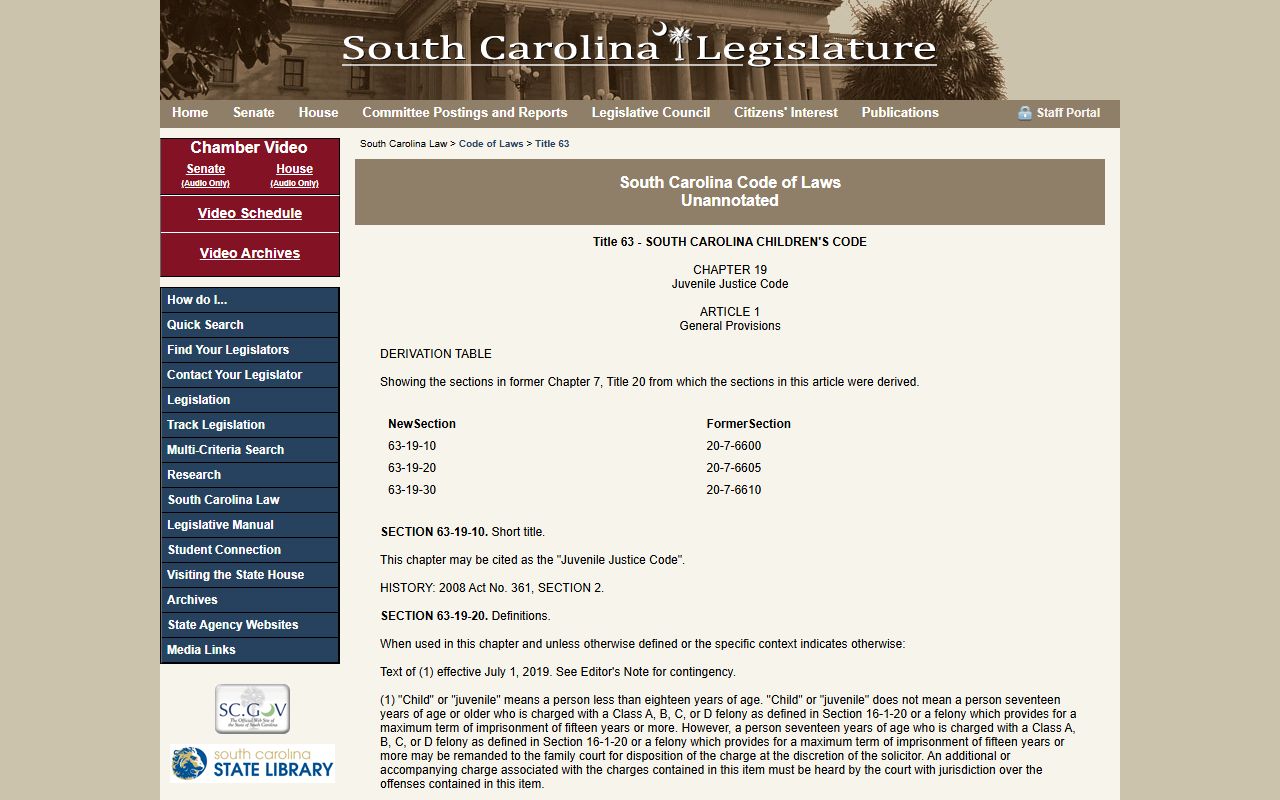
Juvenile limits are a major reason a search for Beaufort County arrest records may not return every charge or identity detail.
Reports, Copies, and Fees
For court copies, the Beaufort County Clerk of Court handles General Sessions records. The Clerk fee schedule lists a $25 records search for civil, judgment, and General Sessions records, $3 certification, $4 exemplified copy, and copy charges by page. For law-enforcement reports, the Sheriff's Office uses report inspection and FOIA routes. The BCSO FAQ fee schedule in the research lists a $20 per hour minimum, billed in quarter-hour increments, plus media costs for DVD, CD, or thumb drive.
County FOIA is a fallback for county department records, but it is not a shortcut around court rules, sealed records, juvenile restrictions, or law-enforcement exemptions. Beaufort County's FOIA FAQ says the county has 10 business days to make a determination for records less than 24 months old and 20 business days for older records, then 30 or 35 calendar days to make non-exempt records available depending on age.
Note: Certified court records, jail booking data, and Sheriff's reports each come from different Beaufort County channels.