
Beaufort County Court Docket Basics
A court docket is the court's working list of case activity. In Beaufort County, a docket may show hearing dates, roster dates, motions, filings, disposition events, and scheduled appearances. A docket is not the full case file. The full file may include pleadings, orders, exhibits, transcripts, certified copies, and documents that are not shown in a calendar view.
The word "roster" is common in South Carolina court practice. Court rosters are calendar lists for scheduled court terms, hearings, jury activity, motions, and other settings. Beaufort County court dockets may appear through the statewide roster tool, the Public Index, Magistrate Court posted docket pages, or municipal court schedules. The right channel depends on the court that has the case.
| Record Type | Main Use | Where to Start |
|---|---|---|
| Docket or roster | Confirm hearings, events, and calendar settings. | Court Rosters or Magistrate online dockets. |
| Full case record | Review pleadings, orders, judgments, and certified copies. | Public Index and Clerk of Court. |
| Municipal schedule | Check city traffic, ordinance, and lower criminal sessions. | The city or town municipal court page. |
Find Beaufort County Court Dockets
The state roster path starts with the South Carolina Judicial Branch Court Roster Search and the Beaufort County roster endpoint linked by the Clerk. For many trial-court users, the Beaufort County Court Rosters tool is the direct calendar source. For lower court matters, Beaufort County Magistrate Court publishes docket links by category.
The Magistrate Court online docket page states that dockets are posted one week before the court date. They are current as of posting and are not updated after posting, except preliminary-hearing dockets, which are updated each Wednesday. The county also warns that all dockets are subject to change without notice.
The image below was captured from the Beaufort Magistrate online dockets page.
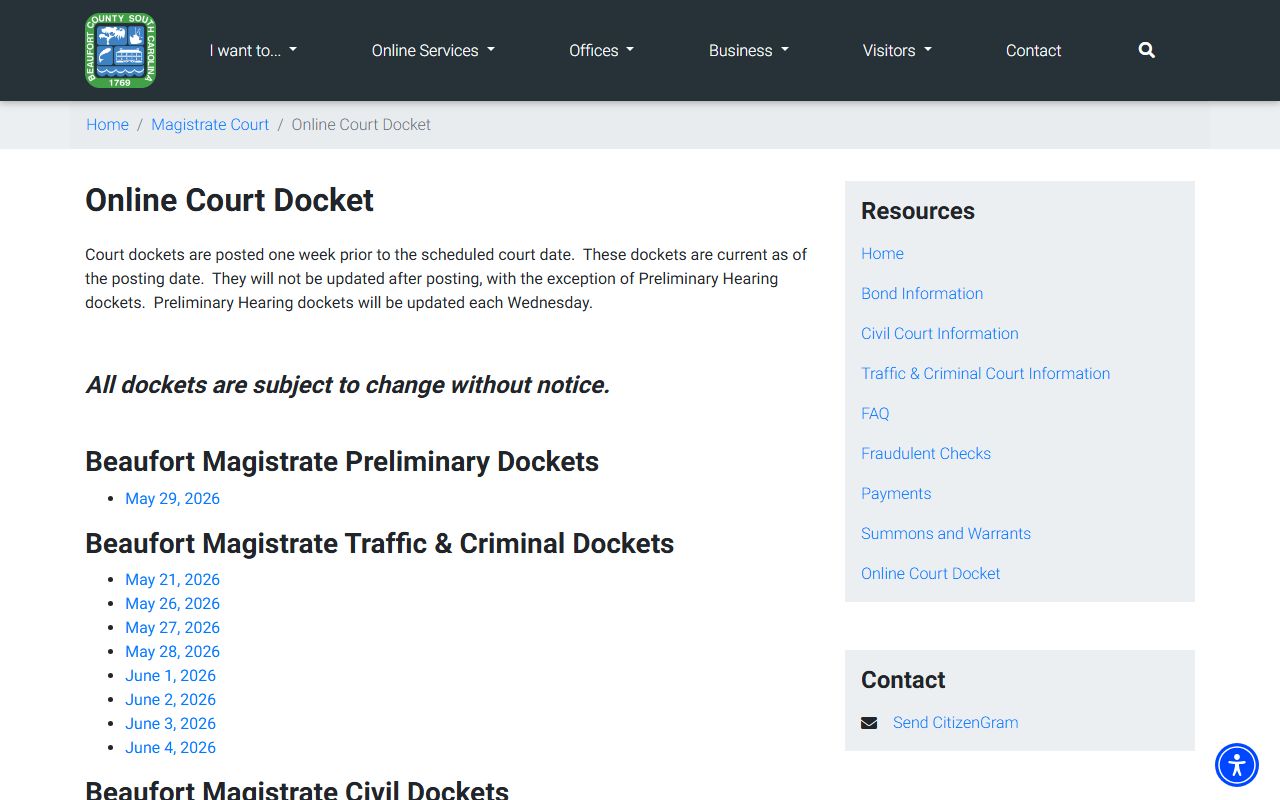
Magistrate postings are useful for near-term Beaufort County court dockets, but the county warns that the posted list can change.
- Open the South Carolina court roster search or the Beaufort County roster link from the Clerk page.
- Select Beaufort County or the court division that matches the case.
- Use a party name, case number, court type, or date when those fields are available.
- For Magistrate matters, check the county docket category, such as Beaufort traffic and criminal, preliminary dockets, or Bluffton civil dockets.
- Confirm urgent hearing questions with the court office, the attorney, the Solicitor, or the Public Defender when the roster note points there.
Beaufort County Docket Sources
Beaufort County court dockets are split across the county's court structure. Circuit Court includes Common Pleas civil matters and General Sessions criminal matters. Family Court handles domestic and juvenile matters. Probate Court has estate, guardianship, conservatorship, marriage, and commitment business. Magistrate and Municipal Courts handle many traffic and lower criminal matters. Master-in-Equity hears foreclosure and equity matters referred to that court.
The Beaufort County Master-in-Equity page names Judge James J. Wegmann and lists motions and foreclosure contacts. Master-in-Equity questions are not the same as ordinary criminal or traffic docket questions because the court handles equity and foreclosure matters.
This image was sourced from the Beaufort County Master-in-Equity page.
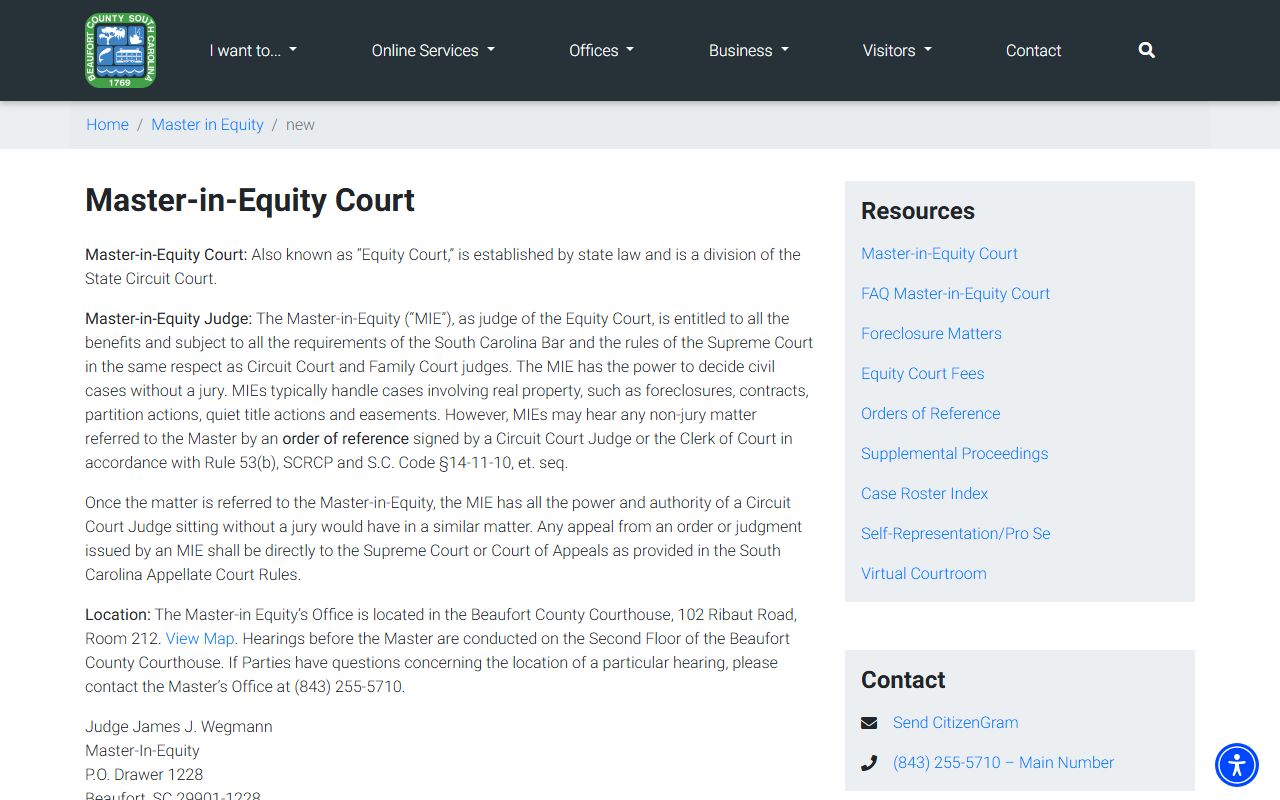
Master-in-Equity docket questions may require office contact rather than a standard trial-court roster search.
- Circuit Court rosters cover Common Pleas civil and General Sessions criminal settings.
- Family Court rosters cover divorce, support, custody, adoption, juvenile, and domestic matters when public access applies.
- Magistrate docket links include preliminary, traffic and criminal, civil, and jury roster meeting categories for Beaufort and Bluffton.
- Municipal courts in Beaufort, Bluffton, Port Royal, Hardeeville, and Yemassee publish or provide city-level traffic and criminal schedules.
- Appellate dockets route through C-Track for the South Carolina Court of Appeals and Supreme Court.
Beaufort County Docket Entries
A docket entry is a short case event, not a full legal document. It may identify the entry date, hearing date, event type, court, judge, party, attorney, and status. Some entries show whether a document is linked or filed. Other entries only describe a setting, action, or outcome. Names and identifiers may be redacted when court rules or statutes require protection.
| Field | What It Shows |
|---|---|
| Entry Date | The date the action, filing, or docket event was entered. |
| Event Type | The kind of action, such as hearing, motion, order, judgment, notice, plea, or continuance. |
| Roster Date | The date tied to a calendar, hearing, trial term, or docket list. |
| Party Filing | The party, attorney, or court actor connected to the entry when shown. |
| Document Link | A link or document marker if the system makes the item available online. |
| Status | A current case or event status, such as pending, disposed, paid, appealed, sealed, or expunged. |
Note: A docket can show that an order exists without making the order itself available online.
Beaufort County Appellate Dockets
When a Beaufort County case moves beyond trial court, appellate case information is searched through C-Track rather than the county Public Index. The C-Track appellate case search includes case-title and filed-date options, appellate case number, type, group, court, and an option to exclude closed cases. C-Track also has a participant search for names, organizations, SC Bar numbers, and SCDC inmate numbers.
The appellate case-search screenshot came from South Carolina C-Track case search.
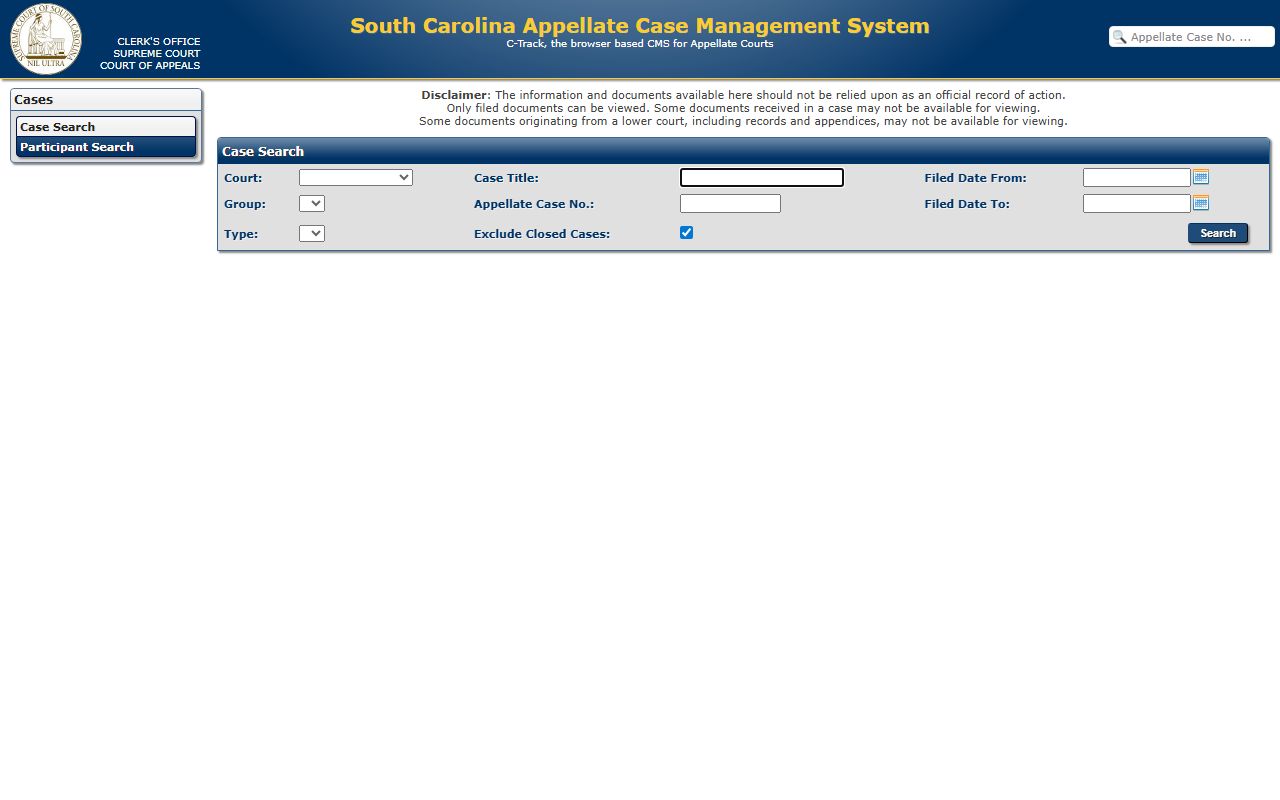
C-Track is the better path for appellate docket activity after a Beaufort County case reaches the South Carolina appellate courts.
The participant-search screenshot was captured from South Carolina C-Track participant search.
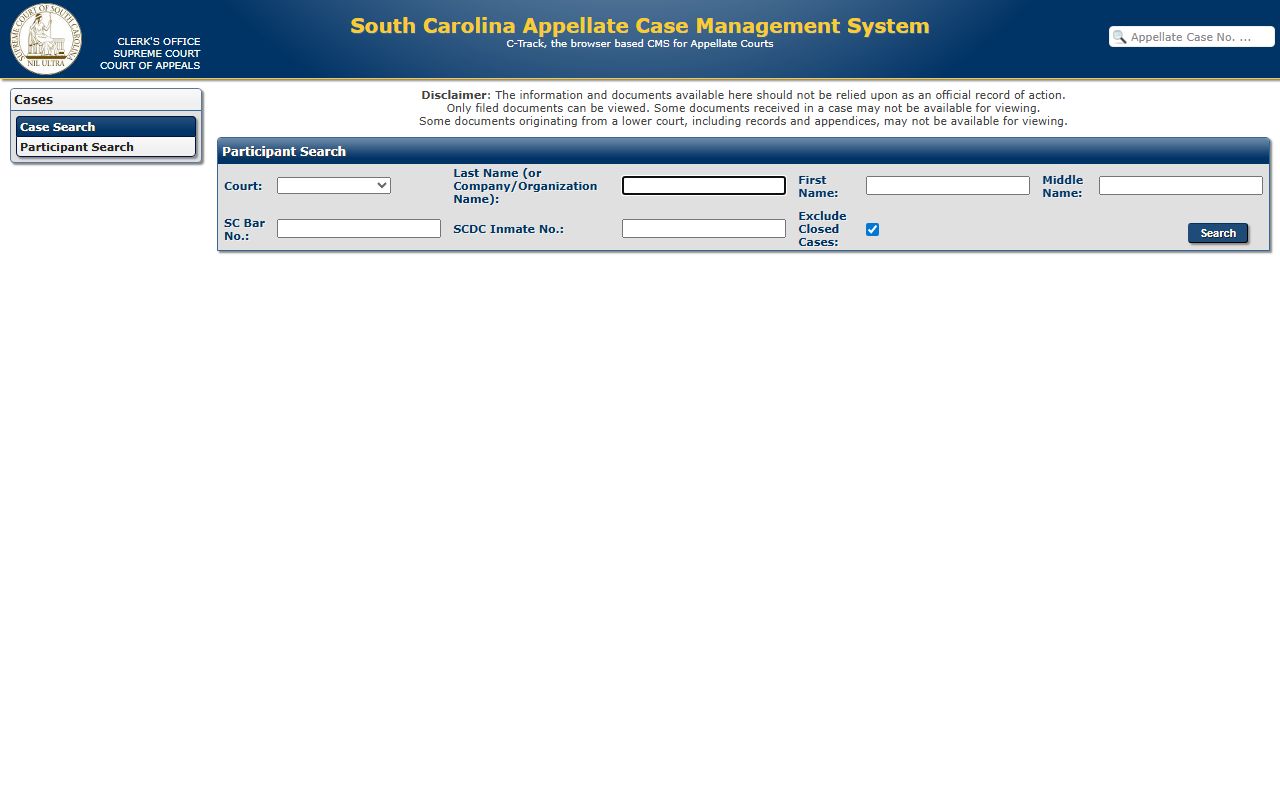
Participant search helps when the appellate case number is unknown but a party, attorney, organization, or inmate number is available.
Beaufort County Dockets vs Records
Dockets and case files answer different questions. A docket is built for tracking. It tells a reader what has happened, what is set, and where the case stands. A case record is built for proof and detail. It may include the filings, orders, notices, affidavits, judgments, sentencing entries, or certified copies needed for legal use.
For Beaufort County court dockets, a roster can be enough to confirm a court date. For legal review, background research, certified proof, or a record filed with another agency, the full case record or certified copy is usually needed from the court office. A user checking a full case file can start at Beaufort County court records and then contact the Clerk of Court if the online entry is not enough.
| Docket | Full Case Record | |
|---|---|---|
| Format | List of events, settings, and roster dates. | Filed documents, orders, judgments, and certified copies. |
| Best For | Checking timing, status, and hearing activity. | Reviewing legal history, proof, or document content. |
| Access | Often free online through rosters or posted dockets. | May require a clerk request, fee, or in-person review. |
| Limits | May change without notice and may omit documents. | May include restricted, sealed, or redacted material. |
Read Beaufort County Court Dockets
Docket terms are short because calendars need to be compact. "Common Pleas" means the civil side of Circuit Court. "General Sessions" means the criminal side of Circuit Court. "Disposition" means the outcome or current result. "Continuance" means the matter was postponed. "Roster" means a court calendar or list of scheduled matters.
Sealing can also affect docket access. South Carolina Rule of Civil Procedure 41.1 describes the process for sealing court material. A sealing motion must identify the material or part to be sealed and explain why sealing is justified. C-Track also states that non-public, sealed, confidential cases, events, and documents are not available through its public access tool.
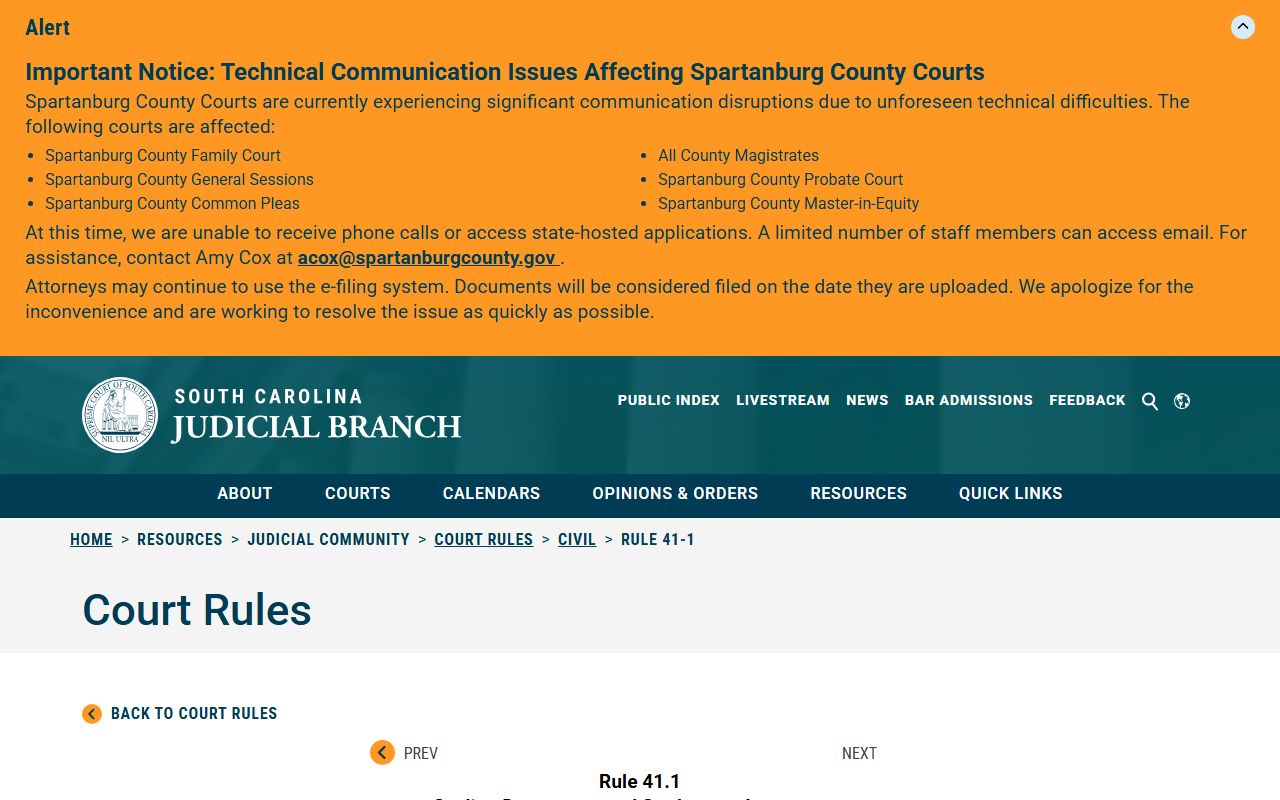
The sealing-rule image came from South Carolina Rule 41.1.
Sealed material may leave little or no public docket detail, even when the existence of a case or event is otherwise known.